Traffic Racer
- 4.6
- Rating
- 100.00M
- Installs
- Free
- Price
 Analysis by App-foxy
Traffic Racer is the kind of racing game I open when I want a quick burst of concentration rather than a long, story-driven session. It keeps the idea simple: drive through traffic, react quickly, and try to survive long enough to improve your run. That simplicity is its biggest strength, but it also defines its limits. This is not a deep simulation or a cinematic racing adventure. It is a focused arcade game built around timing, repetition, and the small satisfaction of beating your previous performance.
After spending time with it, my main conclusion is straightforward: Traffic Racer works best as a compact, pick-up-and-play racing experience for people who enjoy gradually sharpening their reflexes. The free entry point makes it easy to try, and its broad availability helps explain why it has become such a familiar name in mobile racing. At the same time, players looking for extensive customization, a campaign with characters, or realistic driving physics may find the experience too narrow.
Why the simple traffic format still works
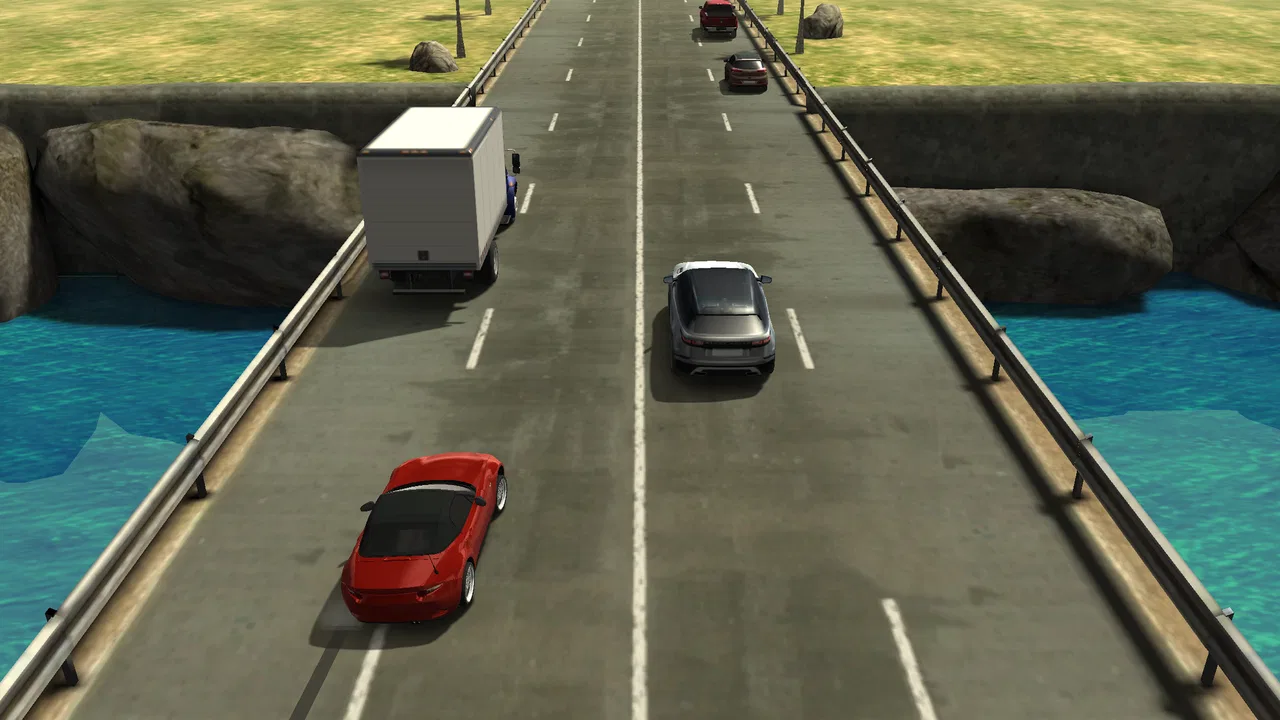
The central appeal comes from turning ordinary road traffic into the entire challenge. Instead of competing on a conventional circuit with a fixed group of opponents, I am constantly judging gaps, speed, distance, and risk. A clear lane can suddenly become a problem when another vehicle blocks the route, so even a short run asks for active attention. That makes the game immediately understandable without making every moment automatic.
You May Also Like

 Blood Strike: 2.5 Anniversary
Blood Strike’s Loadouts Turn Every Drop Into a Tactical Gamble
A close look at Blood Strike’s custom loadouts: how fast access to signature weapons reshapes its battle royale rhythm, rewards preparation, and narrows the gap between fights.

 Pandora - Music & Podcasts
Pandora’s Music Is Easy to Start, but Harder to Recover
Pandora’s strength is its low-effort path from a seed to a station. Its weak spot is how much confidence it asks you to place in connection, setup, and quiet recovery.

 8 Ball Pool
 Is Built on Rivalries, Rematches, and Routine
A close look at the rivalries, rematches, shared routines, and unanswered safety questions that turn a quick pool match into a persistent mobile community.

 Samsung Music
’s Quiet Strength Is Playing What You Already Own
Its reach comes less from spectacle than from dependable access to a personal library. That simplicity is both the app’s strongest retention engine and its ceiling.

 AccuWeather: Weather Radar
AccuWeather Review: A Quick, Clear Forecast for Everyday Decisions
For everyday plans, the best forecast is the one you can understand quickly. AccuWeather makes rain timing, radar, and local conditions easy to act on, with a few trade-offs.

 Hill Climb Racing
Why Hill Climb Racing Still Turns Crashes Into One More Run
A tiny car, a bumpy hill and one more upgrade: Hill Climb Racing keeps resurfacing because its simple chaos makes every near-miss feel personal.
More From Our News Desk
View All News


I like that the basic objective does not need a lengthy explanation. You accelerate, steer, pass vehicles, and try to maintain control. The action is easy to recognize, yet the margin for careless movement becomes smaller as I commit to faster overtakes. A safe pass earns progress, while an impatient one can end the run. That relationship between confidence and restraint gives the game more character than its short description suggests.
The presentation also supports this direct approach. Traffic Racer is a racing game from skgames, released in late 2013, and its long presence on mobile makes sense because the format remains easy to understand on a phone. It does not require me to remember a complicated plot or learn a large set of controls before enjoying a session. I can start playing almost immediately, which is especially useful when I have only a few minutes available.
Its audience reach is substantial: the game has passed one hundred million installs, with an average rating of 4.6 from around 6.2 million ratings and about 129 thousand written reviews. Those figures do not automatically make a game perfect, but they do reflect a format that has connected with a very large number of mobile players. In my experience, the reason is less about novelty and more about accessibility. The game gives players a familiar driving task and lets improvement come from practice rather than from understanding a complicated rule set.
Controls that reward small corrections
Mobile driving often fails when steering feels either too loose or too sensitive. Here, the important skill is not making dramatic movements but making small corrections at the right time. I found that smooth steering is more useful than repeatedly swiping or tapping in panic. When traffic tightens, a tiny adjustment can preserve a run that a larger movement would ruin.
That makes the game surprisingly good for short practice sessions. I can focus on one specific habit, such as leaving more room before changing position or resisting the urge to pass when the next gap is uncertain. This is one of the less obvious strengths of the design: progress is not only about unlocking or collecting something. It also comes from learning how to read the road more calmly.
For a realistic everyday example, I would use it during a short break between tasks. A single attempt is enough to reset my attention, but the controls are responsive enough that I do not feel I am merely watching traffic move. If I fail because I tried to squeeze through a narrow opening, I usually understand what went wrong immediately. That quick feedback makes another attempt feel worthwhile instead of frustratingly random.
Where the arcade design creates variety
The game’s variety comes from the changing pressure of traffic and the different decisions each stretch of road demands. An open section encourages speed, while a crowded section tests patience. I enjoy that contrast because it prevents the whole experience from becoming a single repeated gesture. Even when the visual setting is familiar, the spacing of vehicles changes how I approach the next few seconds.
This is also where the game differs from many conventional racing alternatives. A circuit racer normally asks me to learn corners, braking points, and a fixed route. Traffic Racer instead asks me to process a moving situation. That makes it less suitable for players who love mastering one track through exact lap times, but more appealing to anyone who prefers unpredictable, reactive driving.
Compared with a realistic racing simulator, it is much easier to enter and much less concerned with technical driving detail. There is no need to spend a session learning a complex vehicle setup before reaching the enjoyable part. Compared with a pure endless runner, however, the driving perspective gives my decisions more weight. I am not simply changing lanes because an obstacle appears; I am choosing how aggressively to use the available road.
The trade-off is clear. The game offers immediate action and repeatable skill-building, but it does not provide the same sense of progression as a large racing package. If I want a broad garage, elaborate events, or a structured career, another racing title will probably serve me better. Traffic Racer is strongest when I judge it as an arcade driving challenge rather than as a complete motorsport collection.
What the free version means in practice
The game is free to download and is rated for Everyone, which makes it approachable for a wide audience. That does not mean every player will have the same relationship with it. The experience is built around repetition, so younger players may enjoy the immediate driving while older players may appreciate it more as a reflex exercise or a quick distraction.
There are in-app purchases ranging from $1.99 to $59.99 per item. I would keep that in mind before recommending it to someone who prefers a completely self-contained purchase model. The free starting point is useful because I can test the driving feel without paying first, but anyone who dislikes optional spending prompts or progression pressure should make a deliberate choice about how they use the game.
My practical advice is to begin without spending anything and first decide whether the core traffic challenge holds your attention. If I am still enjoying short runs after learning the basic rhythm, then optional purchases can be considered on their own merits. If the driving itself does not feel satisfying, spending more will not solve that problem. The game’s value comes from its moment-to-moment handling, not from adding money to an experience I already find uninteresting.
The weakness: repetition becomes visible quickly
The same focused design that makes Traffic Racer accessible can also make it feel limited. Once I understand the basic pattern, the experience depends heavily on my willingness to repeat it. Players who enjoy chasing personal improvement may see that repetition as the point. Players who need frequent new objectives may feel that the road has stopped offering enough surprises.
This is the most meaningful limitation for me. The game can create tension during a run, but it does not automatically create a strong long-term reason to return for everyone. Without a personal goal, such as improving consistency or taking safer overtakes at higher speed, sessions can start to blend together. I would not choose it as my only racing game if I wanted a constantly expanding set of activities.
The lack of a deeper racing structure also affects the emotional payoff. A traditional racing game can make a victory feel important because it completes an event, advances a championship, or unlocks a new part of a larger journey. Here, the satisfaction is more personal and immediate: I drove better than before, survived a difficult stretch, or made a risky pass work. That can be rewarding, but it is a quieter kind of reward.
Another point is that arcade handling will not satisfy everyone. I prefer it when I want quick reactions, yet players who expect weighty braking, detailed vehicle behavior, or authentic racing technique may find the driving too simplified. It is better to approach the game as a test of timing and traffic awareness. Expecting a simulation will create disappointment that the game never needed to invite.
Small habits that make runs more enjoyable
The first useful habit is to treat open road as an opportunity to stabilize rather than an excuse to make every possible overtake. When traffic becomes dense, I get better results by preserving a comfortable line and waiting for a genuinely clear opening. This sounds cautious, but it creates longer runs and gives me more control over when to take a risk.
The second is to avoid changing direction repeatedly when a pass is already working. Nervous corrections are often more dangerous than the original obstacle. I try to choose a path early, make one clean movement, and then return to a stable position. That approach is especially helpful on a phone, where oversteering can happen easily if I react emotionally.
The third is to use each failed attempt as a specific lesson. Instead of thinking “I crashed,” I ask whether I entered the gap too quickly, moved too late, or failed to leave an escape route. This turns the endless format into a practical training loop. The game does not need to explain these lessons directly; the road provides immediate evidence when a decision was too ambitious.
A fourth tip is to match the session length to the game’s design. I enjoy it more when I stop after a few focused attempts than when I force a long play period after my attention has faded. Because the challenge relies on concentration, tired play can make the controls feel worse than they are. Short sessions protect the part of the experience that works best.
Who should install it, and who should skip it
I would recommend Traffic Racer to someone who wants a free arcade racing game that starts quickly, works well in short bursts, and rewards better judgement over time. It is a good fit for players who enjoy traffic weaving, personal bests, and the tension of deciding whether a gap is safe. It can also suit families looking for an Everyone-rated racing option, provided adults are comfortable managing the game’s in-app purchase model.
It is particularly suitable for a player who has a few minutes during a commute break, a waiting room, or the pause between household tasks. In that situation, the game does not punish me for failing to commit to a long campaign. I can play one run, put the phone away, and return later without needing to reconstruct a complicated story or remember a large set of objectives.
I would steer serious simulation fans toward another option. If your ideal racing game includes detailed car tuning, realistic track technique, licensed competition, or a substantial career, this is not the right destination. I would also hesitate to recommend it to players who need constant content changes. Its appeal depends on finding enjoyment in refinement: taking cleaner lines, making fewer mistakes, and becoming more comfortable with pressure.
Device compatibility is relatively broad, with support beginning at Android 7.0, and the current version is 4.0. That makes it a practical candidate for people using older Android hardware, although the final experience will still depend on the phone itself. I would check the available storage and performance on a particular device before assuming any mobile game will feel identical across every handset.
My verdict after looking beyond the first few runs
Traffic Racer succeeds because it understands the value of a clear idea. It turns ordinary traffic into a repeatable arcade challenge, gives the player immediate control, and leaves enough room for skill to matter. I appreciate that I can improve through calmer decisions rather than needing to memorize a complicated system. That makes the game easy to recommend when someone asks for a straightforward racing distraction.
Its limitations are just as clear. The experience can become repetitive, its arcade approach will not please simulation fans, and its long-term appeal depends on whether personal improvement is enough motivation. The free price makes trying it easy, but the available in-app purchases mean I would still approach spending carefully rather than assuming every player will prefer that model.
Overall, I see it as a dependable mobile racing game rather than an all-purpose racing platform. I would install it for quick sessions, reflex practice, and the satisfying challenge of making one more clean pass through traffic. I would choose a deeper alternative for a full racing career. For the right player, though, the strongest reason to play is the simple loop of judge, steer, survive, and try to do it more cleanly next time.
That is why I can recommend Traffic Racer with a clear condition: download it if you enjoy compact arcade challenges and do not need every session to deliver a new mode or a major unlock. Give it a few focused runs, learn to value safe positioning over frantic movement, and decide whether that rhythm fits you. If it does, the game offers an honest, accessible way to turn spare minutes into a surprisingly concentrated driving test.
FAQs for Traffic Racer
01What is Traffic Racer and how does it work?
Traffic Racer is an endless arcade racing game where players drive through highway traffic to earn points and money. The game offers a variety of cars and environments, allowing players to choose different vehicles and settings. The primary objective is to drive as fast as possible without crashing, collecting rewards to purchase upgrades.
02What platforms is Traffic Racer available on?
Traffic Racer is available on both Android and iOS platforms. Users can download the game from the Google Play Store for Android devices and the Apple App Store for iOS devices. It is optimized for smartphones and tablets, providing a seamless gaming experience across different devices.
03Are there in-app purchases in Traffic Racer?
Yes, Traffic Racer includes in-app purchases. Players can buy in-game currency to unlock new cars and upgrade existing ones. While the game is free to download and play, these purchases can enhance the gameplay experience, offering quicker access to premium content and features.
04Does Traffic Racer require an internet connection to play?
Traffic Racer does not require an internet connection to play. It is primarily an offline game, allowing players to enjoy the racing experience anytime and anywhere. However, an internet connection may be needed for downloading updates or accessing certain online features and leaderboards.
05What age group is Traffic Racer suitable for?
Traffic Racer is suitable for players of all ages, but it is generally recommended for ages 10 and up due to the game's fast-paced nature. The controls are straightforward, making it accessible to younger players, while still offering enough challenge to keep older players engaged.
Pros
- Smooth and responsive controls.
- Wide variety of cars and upgrades.
- Endless gameplay for hours of fun.
- Stunning graphics and environments.
- Minimal ads for an uninterrupted experience.
Cons
- Repetitive gameplay over time.
- Limited game modes available.
- No multiplayer feature.
- In-app purchases can be pricey.
- Occasional performance lags.

Traffic Racer
Gallery